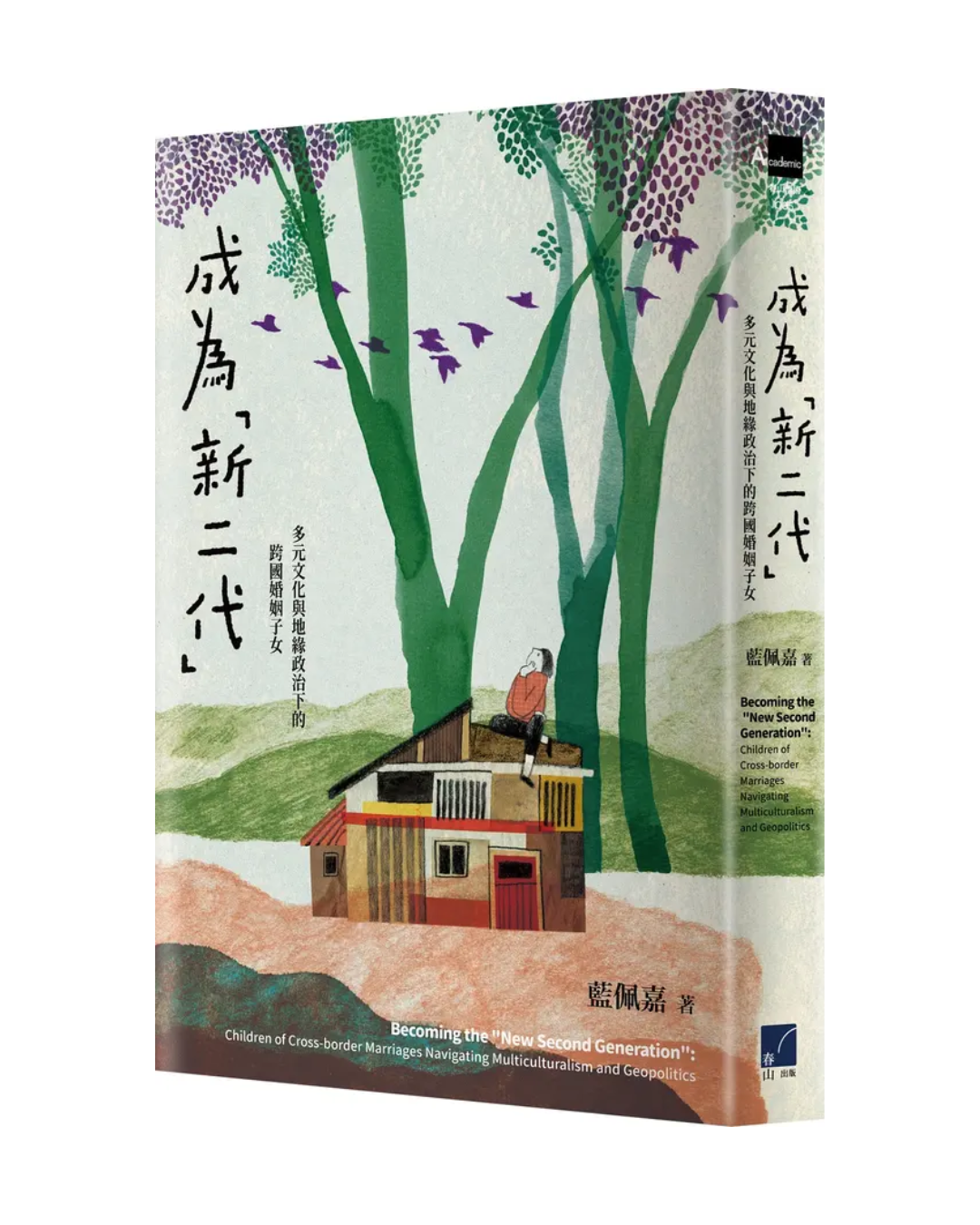
Becoming the New Second Generation
Becoming the New Second Generation
Couldn't load pickup availability
It's not just about personal self-identity.
It also reflects how the broader environment views diverse ethnic groups.
A field study report on Taiwan's "second generation" and their identity.
In Taiwan, the number of children born from transnational marriages is estimated to exceed 500,000. These children were once called "Children of New Taiwan," but since the implementation of the New Southbound Policy, the official designation has changed to "Second Generation New Taiwan," positively highlighting their immigrant background. However, how do the "Second Generation New Taiwan" view this label? How do second-generation individuals from different ethnic groups, classes, and migration experiences define themselves and answer the question "Who am I?" This book explores how these young "Second Generation New Taiwan" individuals negotiate their self-identity within the complex ethnic identity politics amidst the tensions of geopolitical circumstances and multicultural policies.
This book features in-depth interviews with 61 mothers who are adult second-generation children from Southeast Asia or mainland China, as well as 15 new immigrant mothers. It aims to understand, through their life stories, how shifts in national policy and geopolitical contexts influence the life experiences and ethnic identity of new immigrant children. What are the differences in the experiences of second-generation mothers from different countries, especially between "Taiwanese second-generation Southeast Asians" and "Taiwanese second-generation Chineses"? What identity shifts do children returning from overseas, and those who migrated back to their parents' countries of origin (via HNA), experience during transnational migration?
The life experiences and evolving identities of the "new second generation" also prompt us to rethink the definition of Taiwanese. As Taiwan's population gradually incorporates more diverse immigrant origins, the boundaries of Taiwanese people are constantly being rewritten and extended.
Just as our ancestors "became" Taiwanese at different historical periods and at the intersection of ethnicities and cultures, the "new second generation" whose parents entered Taiwan along the path of immigration will continue to expand the identity and cultural boundaries of Taiwanese people.
About the Author
Lan Peijia / Author
Distinguished Professor of Sociology at National Taiwan University, he is the author of books such as "Cinderella Across Nations: When Southeast Asian Domestic Helpers Meet Taiwan's New Rich Employers", "Competing in Upbringing: Globalization, Parenting Anxiety, and Unequal Childhoods", and "Raising Global Families: Parenting, Immigration, and Class in Taiwan and the US". He has won numerous domestic and international awards, including the American Sociological Association Award, the Academia Sinica Humanities and Social Sciences Book Award, the Ministry of Science and Technology's Most Influential Book Award, the Taipei International Book Exhibition Award, the Open Book Award, and the Golden Tripod Award.
Research Collaboration
Liu Qianping
Born in 1997, a native of Lukang, Changhua, she grew up in a Taiwanese-Vietnamese transnational marriage family. She graduated from the National Development Institute of National Taiwan University. She pursued her studies in Taipei during the New Southbound Policy's multicultural boom, reflecting on her experiences with immigration and becoming involved in immigrant worker rights advocacy and related research.
Chen Sihua
A graduate of the Department of Sociology and the Institute of Sociology at National Taiwan University, she also works part-time as a yoga teacher. She has a deep, soulful love for yoga and dreams of making a living from it. She is dedicated to creating a space in the classroom where everyone feels safe, accepted, and belongs.
分享